What Is UTXO — How Bitcoin Records Your Balance
Bitcoin has no balances. Nowhere on the blockchain is there a field that says 'balance.' Instead, Bitcoin tracks every transaction using units called UTXOs.

Lee Chang Jun
Insights
UTXO — Reading Bitcoin's Ledger
Bitcoin has no balances. To be precise, nowhere on the blockchain is there a field that reads "A's balance: 1.5 BTC." Instead, Bitcoin tracks every transaction using Unspent Transaction Outputs (UTXOs). The balance shown in your wallet app is simply the sum of these UTXOs.
A Structure That Resembles Cash
The easiest way to understand UTXOs is to think of physical banknotes.
Say you have $50 in your wallet. That's not a single "50" — it might be two $20 bills and a $10 bill. The total is the same, but the composition differs. Bitcoin works the same way. If your address shows 1.5 BTC, internally there might be three separate UTXOs from past transactions: 0.8 BTC, 0.5 BTC, and 0.2 BTC.
When a payment occurs, a UTXO is consumed whole. If you use the 0.2 BTC UTXO to pay 0.001 BTC for coffee, the original UTXO disappears entirely. Two new UTXOs are created: 0.001 BTC to the café and 0.199 BTC back to you as change. The original UTXO is marked "Spent" and can never be reused.
A Deliberate Design Choice
This structure exists for security.
Each UTXO can only be used once. Any attempt to spend the same UTXO twice — a double-spend — is automatically rejected at the network level. This is the mechanism Satoshi Nakamoto chose to prevent double-spending without a central server.
There are secondary benefits as well. Because each UTXO is independent, network nodes can verify different transactions simultaneously. And since new UTXOs are generated with each transaction, tracing the flow of funds becomes relatively more difficult.
3 to 4 Million BTC Lie Dormant
This is where things get interesting.
Multiple blockchain analytics firms, including Chainalysis, estimate that roughly 3 to 4 million BTC — out of the total 21 million supply — sit in UTXOs that haven't moved in over a decade. Whether the owners lost their private keys or are simply holding is unknown. The blockchain records who controls a coin, but not whether that person still exists.
This uncertainty is not merely academic. Not knowing the actual circulating supply means that economic models of Bitcoin's scarcity carry a built-in margin of error.
How BTCMobick Approaches This Problem
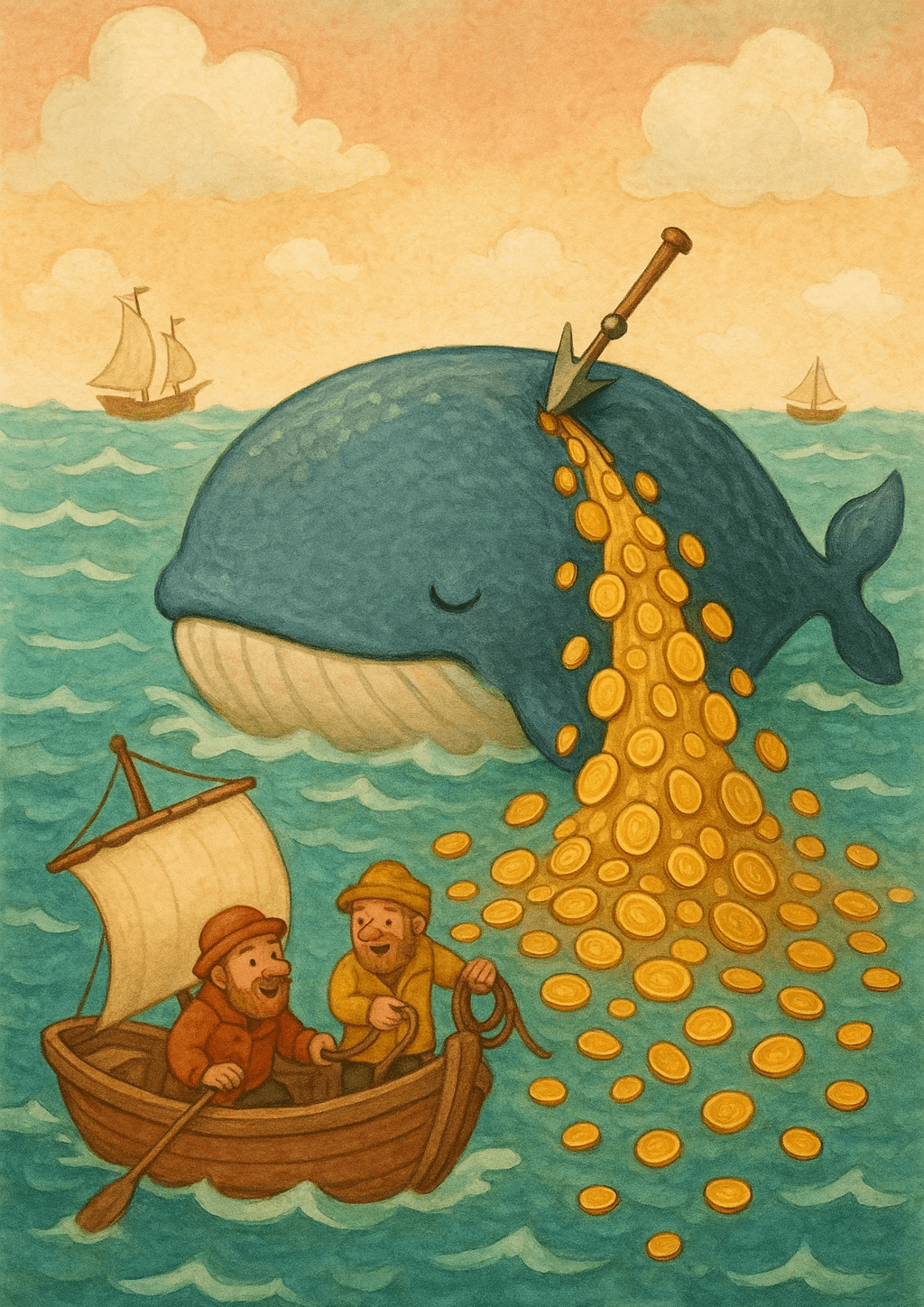
BTCMobick's Whale Hunting project targets the dormant UTXO problem head-on.
A snapshot of Bitcoin's UTXO set is taken at a specific block. Holders prove ownership by signing with their Bitcoin private key to claim BTCMobick. Verified signatures confirm the UTXO as "alive." UTXOs that remain unclaimed after the claim period are considered lost.
This approach is possible precisely because of the UTXO model's characteristics. Each UTXO exists independently and cannot be moved without the corresponding private key — making the question "does the owner of this coin still exist?" answerable.